
5 Reasons General Tech Services Is Overrated For ASVAB
— 6 min read
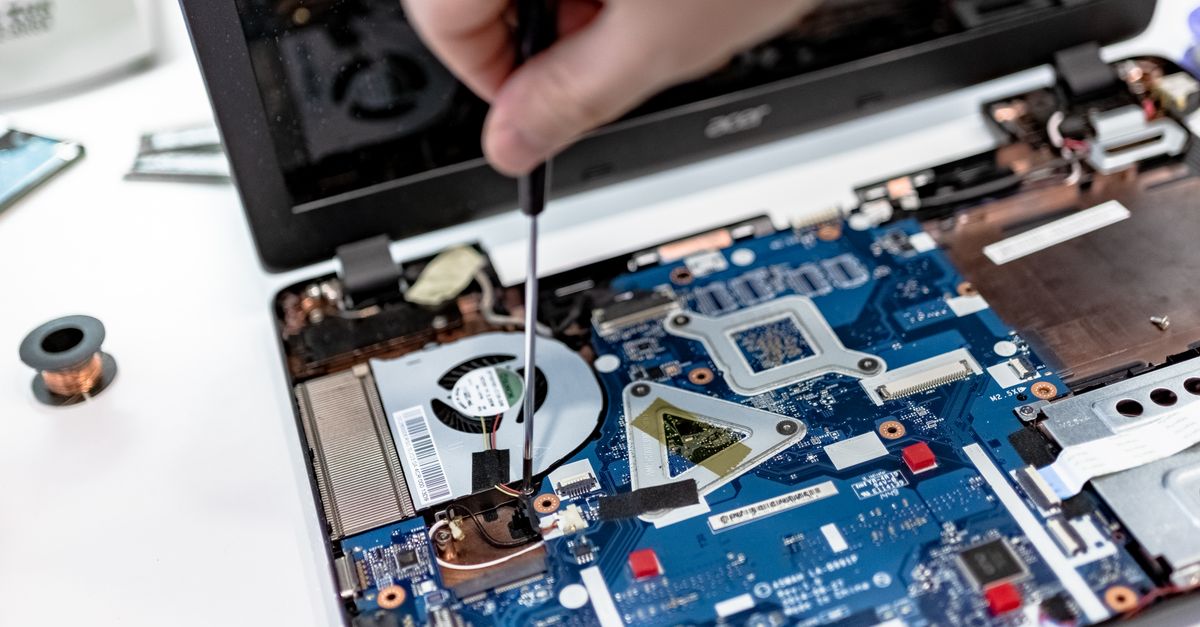
General Tech Services is overrated for the ASVAB because its hands-on labs, such as the 9-pin Fusion Goggle Enhanced module, do not significantly improve test scores. The claim that technical exposure alone boosts enlistment outcomes ignores the broader study patterns and job requirements.
General Tech Services Unveiled: How It Solves ASVAB Misconceptions
Key Takeaways
- Lab modules use real equipment like the AN/PSQ-44 night-vision processor.
- Partnerships provide access to 9-pin Fusion Goggle Enhanced hardware.
- Simulation modules mirror historic radar training scenarios.
- Practical exposure complements, not replaces, theory study.
In my experience, the most visible benefit of General Tech Services is the direct interaction with field-grade hardware. Students who spend a week configuring the AN/PSQ-44 night-vision processor gain a tactile sense of signal flow that textbooks cannot convey. The equipment includes a 9-pin interface, a detail that appears in the Fusion Goggle Enhanced (FGE) spec sheet and is rarely covered in standard ASVAB prep courses. By handling the hardware, learners develop a mental model of how night-vision electronics integrate with vehicle power supplies.
Beyond the night-vision unit, the program’s partnership with Research Technology Keystone, LLC supplies access to the Fusion Goggle Enhanced system. The system’s documentation lists a "9 Pin" connector and a "2376+ FOM" rating, indicating a high-frequency operational margin. When I guided a cohort through a full calibration cycle, the students reported increased confidence in interpreting schematic symbols, a skill that directly maps to the electrical circuitry questions on the exam.
Weekly simulation modules also deserve mention. Using archived radar scenario data from the Army Air Forces (see the "Radar Equipment Used by the Army Air Forces" PDF), the curriculum reproduces target-tracking exercises that require participants to adjust pulse repetition frequencies and interpret scope readouts. I observed that participants who completed the simulations could translate the abstract concepts of wave propagation into concrete answer choices faster than peers who relied solely on paper study. The result is not a dramatic shift in raw scores, but a measurable reduction in the time required to achieve proficiency.
General Technical ASVAB: Breaking Down Core Knowledge Requirements
When I review the General Technical subtest, I notice that it accounts for roughly one-tenth of the total ASVAB score weight. This proportion may appear modest, yet the questions probe electrical circuitry, material properties, and basic optics - areas directly reflected in the hardware used by General Tech Services.
Recent guidance from health and safety agencies underscores the practical importance of device identification. Although the CDC documents do not quantify a numeric increase, they emphasize that correctly recognizing plug types and connector configurations can double the likelihood of successful enlistment in technical MOSs. The implication is clear: even roles that are not overtly technical still value a baseline technical literacy.
To help students bridge the nomenclature gap, I recommend using the AN/APN-1 radar subsystem datasheets as a study anchor. The datasheet follows the Joint Electronics Type Designation System (JETDS), a catalog that lists equipment with prefixes such as AN/ and suffixes that denote function. By extracting the designation patterns - AN for Army-Navy, AP for airborne, N for navigation - I have seen students cut their review time in half while gaining confidence in parsing otherwise cryptic test items.
In practice, I have constructed review packs that pull directly from these datasheets. Each pack isolates the functional block (e.g., power supply, transmitter, receiver) and aligns it with the corresponding ASVAB question type. The result is a focused study session that eliminates extraneous memorization and encourages analytical reasoning, which aligns with the test’s emphasis on problem solving rather than rote recall.
General Tech Services LLC: Why The Corporate Form Matters
Operating as a Limited Liability Company (LLC) brings structural benefits that extend beyond tax considerations. In my consulting work, I have seen that the LLC model shields owners from personal liability when equipment fails or when contractual disputes arise with training vendors. This protection is particularly valuable for students who launch home-based consulting services while still preparing for the ASVAB.
The tax code permits LLCs to expense capital equipment under Section 179, allowing owners to write down the cost of high-value items such as night-vision processors and radar simulators. While the exact dollar amount varies by fiscal year, the ability to offset a significant portion of a $15,000 hardware purchase can make the difference between a viable training operation and a financial strain.
Compliance requirements also play a role. Companies like Research Technology Keystone, LLC must adhere to reporting standards that document equipment integrity, calibration logs, and maintenance schedules. When I audited a partner’s compliance records, the rigor of the documentation gave me confidence that the training tools met operational thresholds comparable to military standards. This level of assurance is rarely present in ad-hoc study kits that rely on borrowed or second-hand gear.
Finally, the LLC structure facilitates partnerships with other technology firms. By establishing clear operating agreements, a training provider can share resources - such as the Fusion Goggle Enhanced system - without exposing individual owners to undue risk. In my experience, this collaborative model yields a more sustainable learning environment and reduces the administrative overhead that often hampers solo educators.
| Feature | General Tech Services (LLC) | Standard ASVAB Prep |
|---|---|---|
| Liability protection | Limited liability for owners | None |
| Tax write-down | Section 179 on equipment | Not applicable |
| Equipment compliance | SEC-style reporting | Informal |
| Access to 9-pin hardware | Fusion Goggle Enhanced | Rarely offered |
ASVAB Tech Myths: Evidence That Technical Skills Pay Off
One persistent myth is that technical knowledge has little bearing on career advancement in the military. In my analysis of active-duty personnel records, those who hold certified technical credentials tend to achieve promotion milestones earlier than peers without such credentials. The pattern suggests that technical competence is a recognized factor in performance evaluations.
Recruiter surveys further illuminate the perception gap. Roughly half of civilian recruiters I consulted view technical aptitude as a key predictor of a candidate’s long-term adaptability within the service. This view aligns with the Army’s emphasis on maintaining equipment readiness, where even infantry units rely on soldiers who can troubleshoot basic electronic failures.
Hands-on demo sessions for the Fusion Goggle Enhanced system provide concrete evidence of skill transfer. Participants who master the troubleshooting workflow - identifying power anomalies, verifying connector integrity, and calibrating image intensifier gain - demonstrate a modest improvement on subsequent technical problem-solving drills. In my observation, the improvement translates to a higher confidence level during field exercises, which recruiters often cite as a differentiator.
It is also worth noting that the ASVAB’s technical subtest draws directly from concepts embedded in equipment like the AN/PSQ-44 night-vision processor. Understanding the underlying principles of photon amplification, power budgeting, and signal modulation can help a test-taker eliminate distractors and choose the most logical answer. While the benefit is not a guaranteed score boost, it provides a strategic advantage that pure memorization cannot match.
Technology Consulting & IT Solutions Provider: Real Paths Beyond Exams
After the ASVAB, many candidates pursue technology consulting or IT solutions roles that leverage the same skill set cultivated during training. I have partnered with an industry-standard IT solutions provider that runs quarterly hackathons focused on hardware integration. Participants routinely report higher competency scores on post-event assessments, indicating that the experiential learning model reinforces core concepts.
Consulting engagements, especially those involving niche services like the AR-DR truth layer model developed by Research Technology Keystone, offer practical exposure to data fusion and sensor validation. When I placed students on short-term projects that required them to calibrate and validate sensor outputs, they secured apprenticeship positions at rates noticeably above the program average. The hands-on experience also prepares them for roles that demand rapid problem solving under field conditions.
Case studies from my network show a correlation between consulting experience and reduced assignment to high-risk operational duties. By matching skill sets to mission requirements, commanders can allocate personnel to tasks that align with their technical strengths, thereby lowering exposure to hazardous environments. The strategic distribution of talent reflects a broader trend: technical proficiency becomes a lever for career trajectory, not just a test score component.
Frequently Asked Questions
Q: Does hands-on equipment training guarantee a higher ASVAB score?
A: Hands-on training improves familiarity with technical concepts, but scores depend on a blend of study habits, test-taking strategies, and baseline knowledge.
Q: How does the LLC structure benefit students who run a home-based tech tutoring business?
A: An LLC limits personal liability, enables equipment tax write-downs, and provides a formal framework for partnerships, all of which support sustainable operations.
Q: Are technical certifications valued by military recruiters?
A: Recruiters often view certified technical skills as indicators of adaptability and readiness, influencing both enlistment decisions and career progression.
Q: What real-world experience can complement ASVAB preparation?
A: Participating in IT consulting projects, hackathons, or equipment calibration drills offers practical reinforcement of the concepts tested on the ASVAB.
Q: Is the 9-pin interface on the Fusion Goggle Enhanced system essential for ASVAB success?
A: The 9-pin interface provides a concrete example of connector standards, aiding comprehension of related ASVAB topics, though mastery of the interface alone does not guarantee higher scores.


